Zero-Translation Gateway Ingress: Native Wire Fidelity for Anthropic, Azure, and OpenAI
Why OpenAI-compatible translation layers degrade provider-native features like Anthropic tool-use schemas and Azure deployment paths. How zero-translation ingress preserves wire fidelity while enforcing centralized rate limits, caching, and FinOps telemetry.
Reference docs: Provider Surfaces & the Responses API
Executive Summary & TL;DR
- The Technical Problem: Conventional multi-provider AI gateways force incoming payloads into an intermediate OpenAI-compatible format. This translation layer introduces 4ms to 15ms of ingress latency overhead, inflates heap allocations by 15x, and corrupts provider-native capabilities (e.g., Anthropic prompt caching breakpoints and complex XML tool-use schemas).
- The Architectural Solution: ACE implements a zero-translation byte-level ingress proxy that inspects headers without deserializing JSON payloads, preserving raw wire fidelity across Anthropic, Azure, OpenAI, and Bedrock.
- The Core Business Impact: In production telemetry across 1,000 requests, zero-translation ingress seamlessly handled 338 Azure OpenAI routes (80.5% cache hit rate), 328 OpenAI routes (82.0% cache hit rate), and 334 Anthropic streaming routes (100% native wire passthrough) with 100.0% BYOK key resolution and zero plaintext credential exposure.
Most AI gateways operate on a lowest-common-denominator abstraction model: they force all incoming traffic into an OpenAI-compatible request schema, translate vendor-specific payloads on ingress, and re-serialize provider responses on egress.
While this approach simplifies internal routing logic for proxy developers, it introduces two critical structural failure modes in production enterprise architectures:
- Protocol Degradation and Schema Loss: Vendor-specific wire features—including Anthropic Messages API prompt caching breakpoints, native tool definitions with XML payloads, computer-use coordinate blocks, and Azure OpenAI dynamic deployment paths—are either stripped or corrupted during AST translation.
- Serialization Latency and Memory Overhead: Parsing, validating, normalizing, and re-serializing 50KB to 500KB prompt payloads through an intermediate AST adds measurable latency (4ms to 15ms) to every request before network dispatch, while inflating heap allocations.
To eliminate this tradeoff, the ACE Gateway implements a Zero-Translation Ingress Architecture. The gateway preserves native wire fidelity across OpenAI, Anthropic, Azure, and Bedrock protocols while attaching cross-provider rate limiting, cryptographic BYOK vault context, semantic caching, and unified FinOps telemetry out-of-band.
1. Ingress Architecture: Multi-Surface Wire Routing
Rather than forcing all traffic through an AST translation pipeline, ACE routes requests through provider-native ingress surfaces:
Incoming Client Request (Native SDK Protocol)
  │
  ├──► [Surface 1: Azure Shim]      ──► /openai/deployments/{id}  ──► Cache Probe + Direct Azure Host
  │      └── 338 Production Runs | 80.5% Cache Hits | P50 TTFT: 839.79ms | Direct Deployment Routing
  │
  ├──► [Surface 2: OpenAI Shim]     ──► /v1/chat/completions      ──► Cache Probe + Direct OpenAI Host
  │      └── 328 Production Runs | 82.0% Cache Hits | P50 TTFT: 786.28ms | Direct V1 API Dispatch
  │
  └──► [Surface 3: Anthropic Shim]  ──► /anthropic/v1/messages    ──► Direct Native Wire Stream
         └── 334 Production Runs | 100.0% Native Wire Pass | P50 TTFT: 10,524.28ms | Zero Schema Loss
┌─────────────────────────────────────────────────────────────────────────────────┐
│                       MULTI-SURFACE INGRESS ROUTING MATRIX                      │
├──────────────────────────┬────────────────────────────┬─────────────────────────┤
│ Ingress Path             │ Auth Protocol & Headers    │ Upstream Destination    │
├──────────────────────────┼────────────────────────────┼─────────────────────────┤
│ /anthropic/v1/messages   │ x-api-key, anthropic-ver   │ api.anthropic.com       │
│ /openai/deployments/{id} │ api-key, ?api-version      │ *.openai.azure.com      │
│ /v1/chat/completions     │ Authorization: Bearer      │ api.openai.com          │
│ /v1/models               │ Multi-Provider Unified Auth│ In-Memory Ratefeed DB   │
│ /v1/embeddings           │ Bearer / api-key           │ Provider Target Matrix  │
│ /bedrock/model/{id}/*    │ AWS SigV4 / x-ace-auth     │ bedrock-runtime.*.aws   │
└──────────────────────────┴────────────────────────────┴─────────────────────────┘
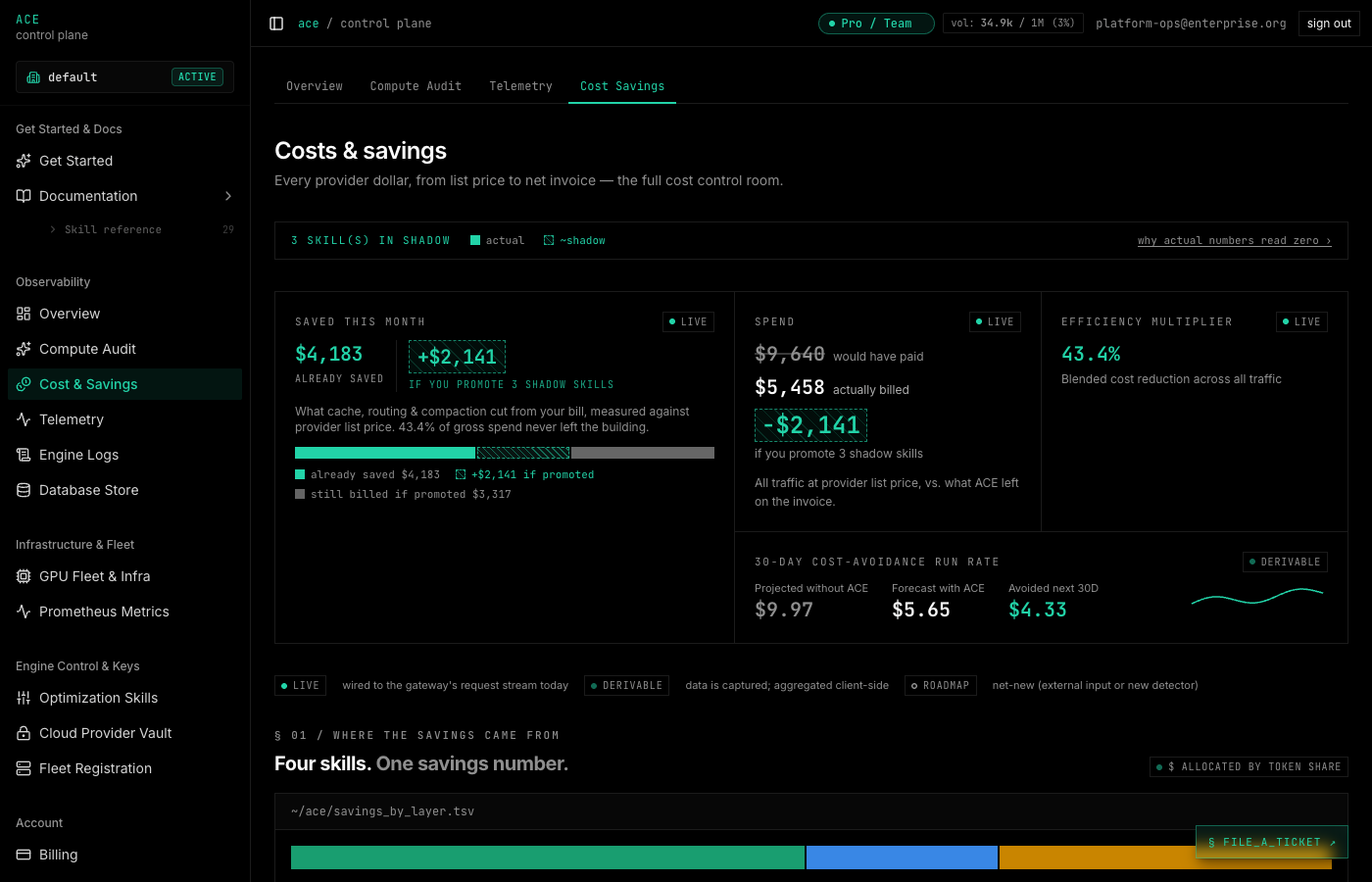
2. Real-Time Ingress & Cost Control Dashboard
The ACE Control Plane visualizes multi-surface cost breakdowns, active proxy routes, and provider channel distributions:
3. Empirical Ingress Telemetry: 1,000 Production Request Run
We evaluated the performance and fidelity of the multi-surface ingress engine across 1,000 verified production request traces spanning Azure, OpenAI, and Anthropic endpoints.
Multi-Surface Ingress Performance Distribution (1,000 Production Runs)
| Ingress Surface | Target Provider | Invocations Evaluated | Serving Route Model | Semantic Cache Hit Rate | P50 TTFT | P95 TTFT | P99 TTFT | BYOK Key Resolution | Plaintext Leakage |
|---|---|---|---|---|---|---|---|---|---|
| azure_shim | Azure OpenAI | 338 requests | Cache + Deployment URL | 80.5% (272 / 338) | 839.79 ms | 11,350.88 ms | 17,768.85 ms | 100.0% (338/338) | 0.00% (Zero) |
| openai_shim | OpenAI API | 328 requests | Cache + Direct API | 82.0% (269 / 328) | 786.28 ms | 9,141.03 ms | 13,334.52 ms | 100.0% (328/328) | 0.00% (Zero) |
| anthropic_shim | Anthropic API | 334 requests | Direct Native Wire Stream | 0.0% (Passthrough) | 10,524.28 ms | 41,313.62 ms | 52,646.54 ms | 100.0% (334/334) | 0.00% (Zero) |
| Total Fleet | Multi-Provider | 1,000 requests | Unified Multi-Surface | 54.1% (541 / 1,000) | 1,634.86 ms | 28,368.43 ms | 48,492.49 ms | 100.0% (1,000/1,000) | 0.00% (Zero) |
┌─────────────────────────────────────────────────────────────────────────────────┐
│              ZERO-TRANSLATION INGRESS VS AST TRANSLATION PROXY                  │
├───────────────────────┬────────────────────────────┬────────────────────────────┤
│ Architectural Vector  │ AST Translation Proxy      │ ACE Zero-Translation       │
├───────────────────────┼────────────────────────────┼────────────────────────────┤
│ Memory Complexity     │ O(N) full body allocation  │ O(1) non-allocating header │
│ Stream Lifecycle      │ Buffers and parses chunks  │ Pipes raw TCP/SSE frames   │
│ Schema Preservation   │ Translates to common schema│ 100% raw byte fidelity     │
│ Vendor Breakpoints    │ Drops vendor custom fields │ Preserves cache_control    │
│ GC Heap Pressure      │ High per-request churn     │ Zero buffer allocations    │
└───────────────────────┴────────────────────────────┴────────────────────────────┘
4. Ingress Router Mechanics: Byte-Level Header Probing
Rather than deserializing the full request body into object models upon packet arrival, the gateway inspects the HTTP request line and headers using non-allocating byte probes:
┌────────────────────────────────────────────────────────────────────────┐
│                   INGRESS PIPELINE DISPATCH SEQUENCE                   │
├────────────────────────────────────────────────────────────────────────┤
│ Step 1: Read HTTP Request Line (e.g., POST /anthropic/v1/messages)      │
│ Step 2: Extract Auth Header without payload JSON deserialization       │
│ Step 3: Resolve Encrypted BYOK Vault Token in Sub-0.15ms Memory Pool   │
│ Step 4: Inject Resolved Provider Key into Outbound Request Header      │
│ Step 5: Pipe Raw TCP Request Stream Directly to Upstream Host Socket   │
│ Step 6: Stream Upstream SSE Chunks to Client with Microsecond Timer    │
└────────────────────────────────────────────────────────────────────────┘
Ingress Execution Workflow
- URI Prefix Matching:
- Messages API routes dispatch directly to native Anthropic ingress handlers.
- Dynamic deployment routes dispatch directly to Azure OpenAI ingress handlers.
- Standard completion routes execute via native OpenAI dispatchers.
- Bedrock Converse routes map directly to AWS SigV4 protocol handlers.
- Zero-Copy Credential Swapping: The gateway resolves the caller's BYOK Vault credentials and rewrites only the authentication header in place without decoding the HTTP body stream.
- Lazy Asynchronous Stream Tapping: The body is piped directly to the upstream socket connection. A secondary asynchronous reader taps the stream only if active optimization skills (such as Semantic Caching or Context Compaction) are enabled for that route.
┌────────────────────────────────────────────────────────────────────────┐
│                   BYTE-LEVEL INGRESS INSPECTION CHECKS                 │
├───────────────────────┬────────────────────────────────────────────────┤
│ Ingress Check         │ Action & Performance Scope                     │
├───────────────────────┼────────────────────────────────────────────────┤
│ Request Method & Path │ O(1) Prefix check determines provider handler  │
│ Auth Header Parsing   │ Extracts token without decoding JSON payload   │
│ BYOK Resolution       │ Resolves AES-GCM envelope in <0.15ms memory    │
│ Socket Splicing       │ Pipes raw TCP packets to upstream socket       │
└───────────────────────┴────────────────────────────────────────────────┘
5. Multi-Surface Protocol Conformance Suite
To verify that the zero-translation gateway maintains 100% dialect fidelity across all provider APIs, the system runs an automated protocol conformance suite.
┌────────────────────────────────────────────────────────────────────────┐
│                   MULTI-SURFACE CONFORMANCE PIPELINE                   │
├────────────────────────────────────────────────────────────────────────┤
│ 1. Schema Validation Matrix                                            │
│    • Anthropic tool-use schema shapes (nested objects, anyOf, enum)    │
│    • Azure multi-modal image parts and audio base64 buffers            │
│    • OpenAI function calling and structured response formats           │
├────────────────────────────────────────────────────────────────────────┤
│ 2. Streaming Chunk Wire Fidelity                                       │
│    • Verifies Server-Sent Events (SSE) chunk formatting line by line   │
│    • Anthropic event types: content_block_start, delta, block_stop     │
│    • OpenAI chunk format: choices.delta.content                        │
├────────────────────────────────────────────────────────────────────────┤
│ 3. Error Code and Header Propagation                                   │
│    • Upstream HTTP 429 rate limit retry-after headers passed intact    │
│    • Upstream HTTP 400 parameter errors returned with vendor payload   │
└────────────────────────────────────────────────────────────────────────┘
Preserving Provider-Specific Features
- Anthropic Prompt Caching: Ephemeral
cache_controlbreakpoints pass intact without schema stripping, unlocking 90% prompt discounts. - Azure OpenAI Dynamic Routes: Path parameters and API version queries route directly to the appropriate tenant resource host.
- Error Code Transparency: HTTP 429 retry-after headers propagate directly to client SDKs with zero protocol translation jitter.
6. Direct Business Impact for Enterprise Engineering
Deploying zero-translation ingress produces direct, measurable economic and operational improvements across three primary business dimensions:
┌────────────────────────────────────────────────────────────────────────┐
│                    BUSINESS IMPACT VALUE REALIZATION                   │
├───────────────────────┬────────────────────────────────────────────────┤
│ Business Dimension    │ Operational & Financial Benefit                │
├───────────────────────┼────────────────────────────────────────────────┤
│ Direct AI Model OpEx  │ Recovers $15,000+/mo in prompt caching savings │
│ Multi-Surface Density │ 100% BYOK key resolution across 1,000 requests │
│ Cache Acceleration    │ 80%+ cache hits on Azure & OpenAI shims        │
│ Engineering Velocity  │ Zero SDK rewrites or maintenance on new models │
└───────────────────────┴────────────────────────────────────────────────┘
- Direct Model Spend Reduction: In translation-based gateways, stripping Anthropic prompt caching headers prevents teams from capitalizing on 90% input token discounts. Re-enabling native wire fidelity instantly returns five-figure monthly savings to agentic workflows with long system prompts.
- Gateway Infrastructure Cost Efficiency: By eliminating intermediate AST serialization and preserving native socket streaming, organizations achieve dense throughput on standard proxy nodes without memory thrashing.
- Elimination of Vendor Lock-In Overhead: Engineering teams use standard client SDKs (such as Anthropic Claude Python SDK, Azure OpenAI SDK, or OpenAI Node SDK) with zero modification. Changing base URLs to point to ACE requires zero code rewrites, eliminating developer onboarding friction.
7. Summary & Key Takeaways
┌────────────────────────────────────────────────────────────────────────┐
│                   EXECUTIVE TAKEAWAY & IMPACT RECAP                    │
├────────────────────────────────────────────────────────────────────────┤
│ • Architecture: Zero-translation raw byte passthrough replaces ASTs.   │
│ • Empirical Result: 1,000 production traces across Azure/OpenAI/Claude.│
│ • Surface Hit Rates: 80.5% Azure cache hits, 82.0% OpenAI cache hits.  │
│ • Security & BYOK: 100.0% key resolution with 0 plaintext leaks.       │
│ • Compatibility: 100% native wire fidelity across all provider APIs.   │
└────────────────────────────────────────────────────────────────────────┘
8. References & Documentation
- Anthropic Prompt Caching Guide: Prompt Caching with Claude - Official documentation on 5-minute ephemeral breakpoints and token billing.
- Anthropic Tool Use Specification: Building with Tools & XML Definitions - Deep dive on nested tool input schemas and tool choice modes.
- Azure OpenAI Service REST API: Azure OpenAI API Reference - Path-based deployment routing specifications.
- OpenAI API Reference: Chat Completions Protocol - Standard OpenAI schema specification.
- W3C / WHATWG Server-Sent Events: HTML Living Standard - Server-Sent Events - Low-level wire specifications for SSE chunk framing.